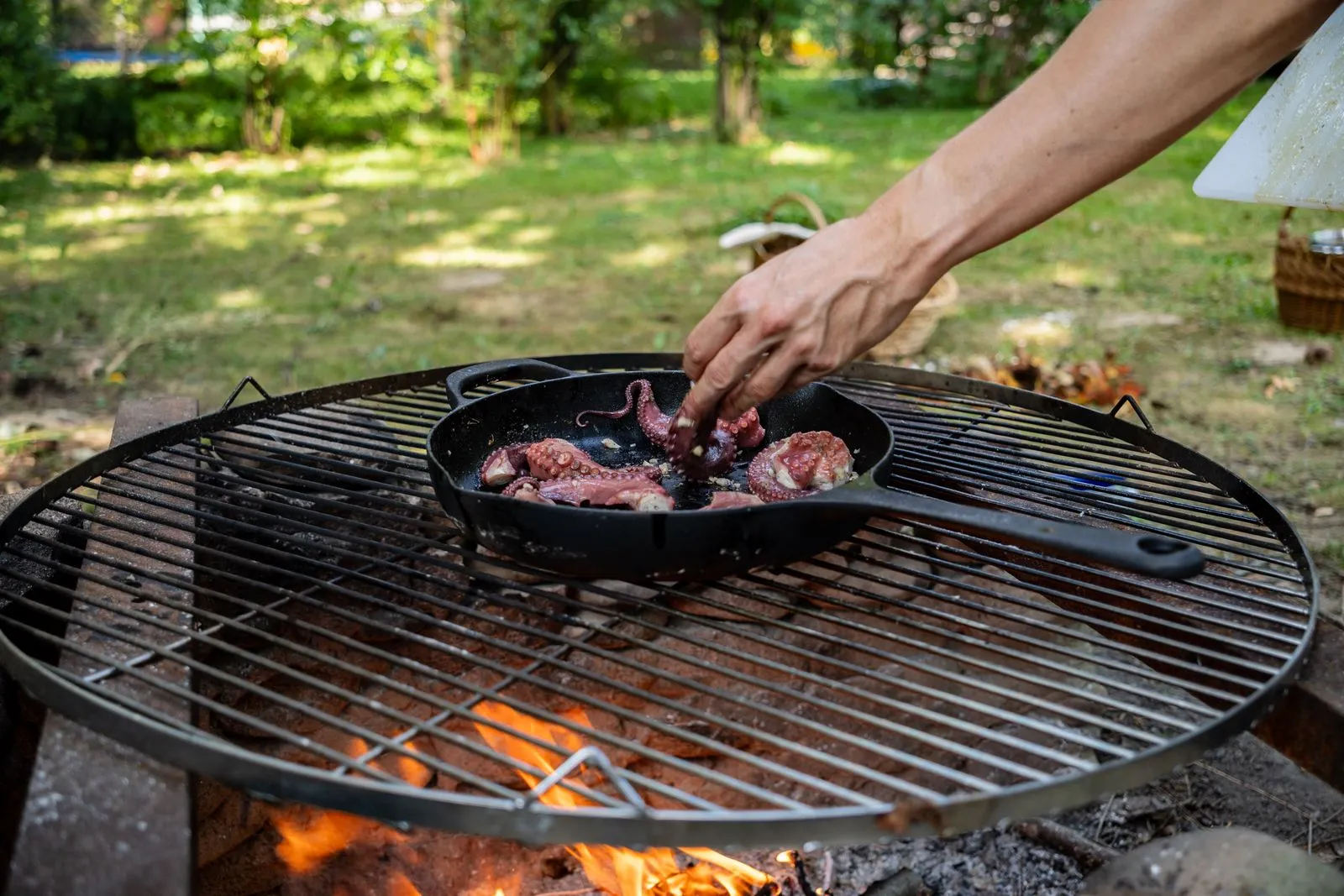
The right cast iron pan should suit the meals you cook, the number of people you feed, and the space available on your hob. A small skillet is easy to handle but may feel cramped when cooking several portions. A larger pan gives you room to sear and combine ingredients, though it takes more storage space and can be heavy. Use this guide to compare common sizes and choose a pan that fits your kitchen.
Small pans for compact meals
Pans around 6 to 8 inches across work well for one or two eggs, a single serving, toasted spices, or a small side dish. Their compact cooking surface heats up with a modest burner and is easier to lift than a large skillet. They can also fit neatly in a smaller cupboard or be useful when you want to cook a separate portion.
A small pan is less suited to meals that need ingredients spread out. Crowding can trap moisture and make browning harder, while food may spill when you stir. Check the pan’s base diameter as well as the rim measurement: a small hob ring should support the base evenly, and a larger ring may heat the sides unevenly.
Medium pans for everyday cooking
A 10-inch pan is a flexible choice for many everyday meals. It can handle a couple of portions of vegetables, a few pieces of meat, or a simple one-pan meal without taking over the hob. Its size is often manageable for regular lifting, but cast iron still weighs more than many other cookware materials, especially when full.
Choose a medium pan if you cook for one or two most of the time and want room to brown ingredients in batches. Before buying, compare the pan’s base with your burner and measure your oven if you plan to bake in it. Include the handle in your measurements, and check that the pan can fit alongside any other cookware you use.
Large pans for family meals
A 12-inch skillet or larger gives you more cooking area for family portions, several pieces of food, or dishes that move from hob to oven. More space makes it easier to arrange ingredients in a single layer, which helps them brown rather than steam. A larger pan can also reduce the need to cook in multiple batches.
The trade-off is weight, storage, and burner coverage. A large skillet may be difficult to lift when loaded, and its base may extend beyond a small burner. On a hob, use a ring that supports the pan base as evenly as possible. For an oven, measure the interior width, including any racks or other cookware that will remain inside.
Match the pan to your kitchen
Think about your usual meal before choosing a size. If you often cook eggs or small sides, a compact pan may be enough. For regular weeknight dinners, a medium skillet offers a useful balance. If you cook for several people or want to roast, bake, or sear larger portions, consider a large pan—provided your hob, oven, and storage space can accommodate it.
If you are choosing one pan, prioritize the meals you make most often rather than occasional recipes. Check the manufacturer’s guidance for your hob type, oven-safe temperature, and handle care; these details can vary between pans. Bristol Ironware can help you compare options in Bristol, but the best fit is the pan you can safely handle and will use often.
A pan’s diameter is only part of the decision. Match its cooking surface to your usual portions, then confirm the weight, burner fit, oven clearance, and storage space. That simple check helps you choose a size that works for everyday cooking as well as the meals you make for others. If you would like help comparing sizes, ask Bristol Ironware about the pans available.